A successful café is more than a place to drink coffee. It is a carefully designed environment where architecture, interior design, lighting, materials, furniture and atmosphere come together to create a memorable customer experience. This is why café interior design plays an important role in the success and identity of modern cafés.
Customers increasingly choose cafés based not only on the quality of food and beverages but also on the atmosphere, comfort and visual character of the space. A well-designed café can become a destination, encourage customers to stay longer and create a strong identity that people remember and share.
At SOSHA Design, we believe successful hospitality interiors should balance aesthetics, functionality and the unique character of each brand. From contemporary cafés to sophisticated hospitality environments, every design decision should contribute to a cohesive spatial experience.
Here are 10 important ideas for creating a memorable café interior.
Begin With a Clear Design Concept
Every successful café interior starts with a clear concept.
Before selecting furniture, colors or decorative elements, it is important to understand the identity of the café. A minimalist specialty coffee shop requires a different atmosphere from a luxurious café, an artistic space or a traditional environment inspired by local culture.
The concept should influence the architecture, material palette, lighting, furniture and decorative details.
A strong concept also creates consistency. Instead of treating every element separately, the entire interior becomes part of one visual language.
The result is a café that feels intentional rather than simply decorated.
Create an Efficient Layout
Café space planning is one of the most important parts of the design process.
The layout needs to accommodate customers, staff, furniture, service areas and circulation without creating unnecessary congestion. Customers should be able to enter, order, find a seat and move through the space naturally.
The relationship between the counter, kitchen or preparation area and seating should also be carefully considered.
Different types of seating can help create flexibility. Communal tables can support social interaction, while smaller tables, benches and comfortable lounge seating can provide more private experiences.
A successful layout combines operational efficiency with customer comfort.
Design an Entrance That Creates a First Impression
The entrance is the first opportunity to communicate the identity of a café.
Architectural details, signage, lighting, materials and landscaping can work together to create a strong arrival experience.
A carefully designed entrance does not need to be complicated. A distinctive material, framed doorway, sculptural lighting element or carefully positioned greenery can be enough to create a memorable first impression.
The transition from the exterior to the interior should also feel natural and connected to the overall design concept.
Use Materials to Create Character
Materials are fundamental to modern café interior design.
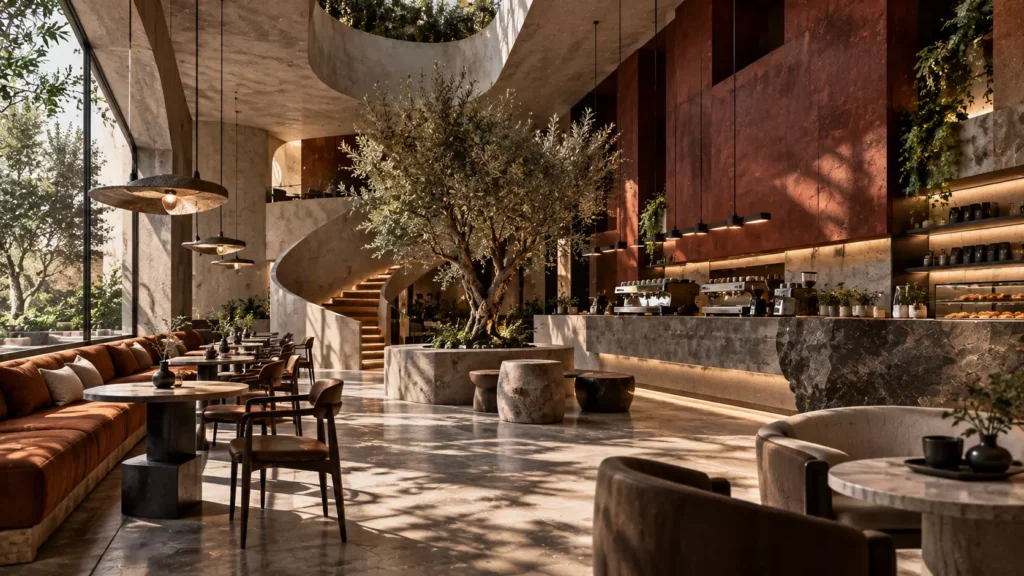
Natural stone, wood, glass, metal, plaster and textured finishes can each create a different atmosphere. Stone can introduce durability and a sense of permanence, while wood adds warmth and natural texture.
Glass can make smaller cafés feel brighter and more open, while metal details can introduce a contemporary architectural character.
The key is not to use as many materials as possible. Instead, designers should create a carefully controlled palette where each material has a purpose.
Material selection should also consider durability, maintenance and long-term performance, especially in high-traffic hospitality environments.
Make Lighting Part of the Experience
Lighting has a major influence on the atmosphere of a café.
A successful café lighting design combines ambient, task and accent lighting. General lighting provides functional illumination, while decorative fixtures and architectural lighting help establish the mood.
Pendant lights above tables or counters can create intimate zones, while concealed LED lighting can emphasize architectural surfaces and material textures.
Warm lighting is often effective for creating a welcoming atmosphere, particularly during the evening. During the day, natural light can provide a brighter and more dynamic environment.
The best lighting solutions are integrated into the architecture rather than added after the interior has already been designed.
Choose Furniture for Comfort and Identity
Furniture has both a functional and visual role in café interiors.
Chairs, tables, benches and lounge seating should be selected according to the scale of the space and the intended customer experience.
Comfort is particularly important. Even the most visually attractive furniture can negatively affect the experience if customers cannot sit comfortably for an extended period.
Furniture can also become part of the café’s visual identity. Distinctive chairs, custom benches or sculptural tables can add personality while maintaining a cohesive relationship with the architecture.
A thoughtful combination of seating types can make the space feel more dynamic and adaptable.
Use Nature to Soften the Interior
Greenery can introduce warmth and life into contemporary café interiors.
Indoor plants, natural wood, stone and large windows can create a stronger connection between the interior and the natural environment.
Plants can also be used strategically to divide spaces without creating solid visual barriers. This can help create smaller seating zones while maintaining an open feeling.
In cafés with outdoor terraces or courtyards, the connection between interior and exterior should be considered as part of the overall design.
Create a Memorable Focal Point
A memorable café often has a visual element that immediately attracts attention.
This could be a dramatic stone counter, a custom ceiling, an artistic lighting installation, a sculptural staircase, a textured wall or a distinctive piece of traditional craftsmanship.
Traditional elements such as decorative glass, handcrafted surfaces or culturally inspired patterns can also be reinterpreted through a contemporary architectural language.
The purpose of a focal point is not simply decoration. It should strengthen the identity of the space and create something customers remember.
Consider Acoustics and Everyday Comfort
Visual design is only one part of a successful café.
Acoustic comfort can have a significant influence on how customers experience a space. Hard surfaces such as glass, stone and concrete can create excessive sound reflection when they are used without acoustic consideration.
Textiles, upholstered furniture, textured walls, acoustic ceiling elements and greenery can help create a more comfortable acoustic environment.
Ventilation and indoor temperature should also be considered during the design process. A café should feel comfortable throughout the day and across different seasons.
Design With Sustainability in Mind
Sustainability is becoming an increasingly important part of contemporary café design.
Energy-efficient lighting, responsible material selection, natural daylight, efficient ventilation and durable finishes can reduce unnecessary environmental impact while improving the long-term performance of the space.
Choosing durable materials can also reduce the need for frequent replacement and maintenance.
Sustainable design does not mean sacrificing visual quality. When considered from the beginning, environmentally conscious solutions can become an integral part of the architectural concept.
What Makes a Café Interior Memorable?
A memorable café is created through the combination of many details rather than a single design feature.
Space planning, materials, lighting, furniture, acoustics, greenery and brand identity should work together as one cohesive experience.
The most successful cafés often have a strong visual identity but remain comfortable and functional. Customers should be able to recognize the character of the space while also feeling that it is welcoming and easy to use.
This balance is particularly important in hospitality design because the interior needs to support both the business and the customer experience.
The Role of Brand Identity in Café Design
A café interior can become one of the strongest expressions of a brand.
Instead of relying only on logos, signs and graphic elements, brand identity can be integrated directly into the architecture through colors, materials, furniture, lighting and spatial details.
For example, a café inspired by natural ingredients might use stone, timber and greenery, while a contemporary urban café might use darker materials, metal details and architectural lighting.
When these elements are carefully coordinated, the interior becomes an extension of the brand rather than simply a place where products are served.
Final Thoughts
Great café interior design combines beauty, functionality and identity.
From the first concept and space planning to material selection, furniture, lighting and sustainability, every decision can influence how customers experience the space.
A successful café should not only look impressive in photographs. It should feel comfortable, operate efficiently and create an atmosphere that encourages customers to return.
At SOSHA Design, we approach hospitality interiors as complete architectural experiences. By combining thoughtful planning, natural materials, lighting, technology and contemporary design principles, we aim to create spaces that remain visually distinctive while responding to the people who use them.
Whether you are developing a new café, renovating an existing space or creating a distinctive hospitality environment, thoughtful design can transform a simple venue into a memorable destination.
Your café deserves more than a beautiful interior. It deserves a space with identity, purpose and lasting character.